
Science · Biological Signaling
Plants speak in molecules.
Every Vitaponix input is engineered against a measurable biological signaling pathway — not a marketing claim.

01
Calcium cascade
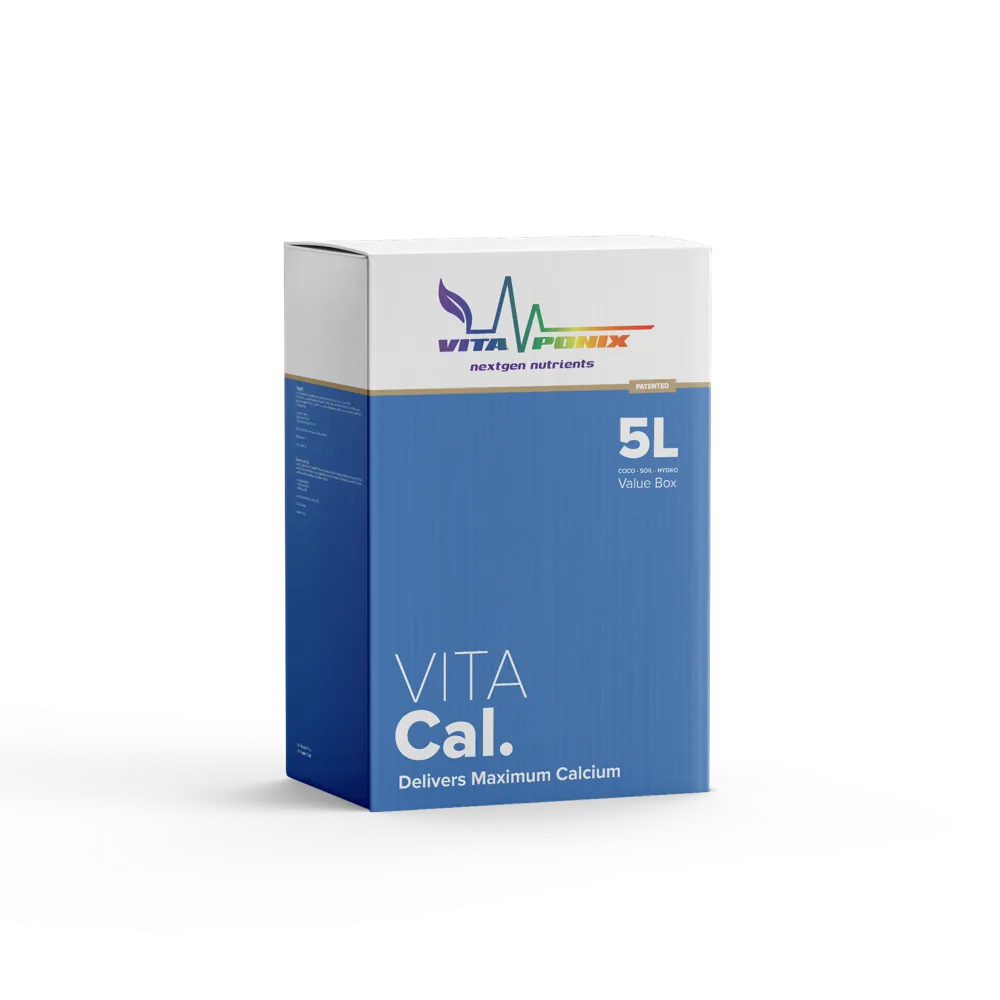
Calcium is the master second-messenger of plant biology. Every stress response, defense pathway and structural reinforcement begins with a calcium signal.
02
Terpene defense
Terpenes are an aromatic defense language. They warn, repel and attract — and signal the plant's metabolic peak.
03
Auxin pathway
Auxin gradients drive root branching, lateral expansion and apical dominance. The blueprint for plant architecture.
04
Phytochrome network
Light-sensitive proteins that decide when to flower, when to stretch, when to rest. The plant's internal clock.
05
Systemic Acquired Resistance
A whole-plant immune response triggered by silicon, salicylic precursors and biological cofactors.
06
Source-sink translocation
Where the plant sends sugar — and therefore where it builds mass. Vitaponix nudges the gradient toward terminal flower.
These signaling pathways all depend on light-driven chemistry — see what photocatalysis is and how it works for the underlying mechanism.
Related
Go deeper
Knowledge
What is photocatalysis and how it works
The mechanism behind light-driven catalysis, the photocatalysts involved, and why it matters for nutrient chemistry.
Read more about What is photocatalysis and how it works →
Product
VitaBase — the foundational nutrient matrix
The chelated, filler-free base feed the photocatalytic and signaling inputs are built on top of.
Read more about VitaBase — the foundational nutrient matrix →
Sourcing
Where our ingredients come from
Marine, volcanic and atmospheric sourcing behind the base profile.
Read more about Where our ingredients come from →