
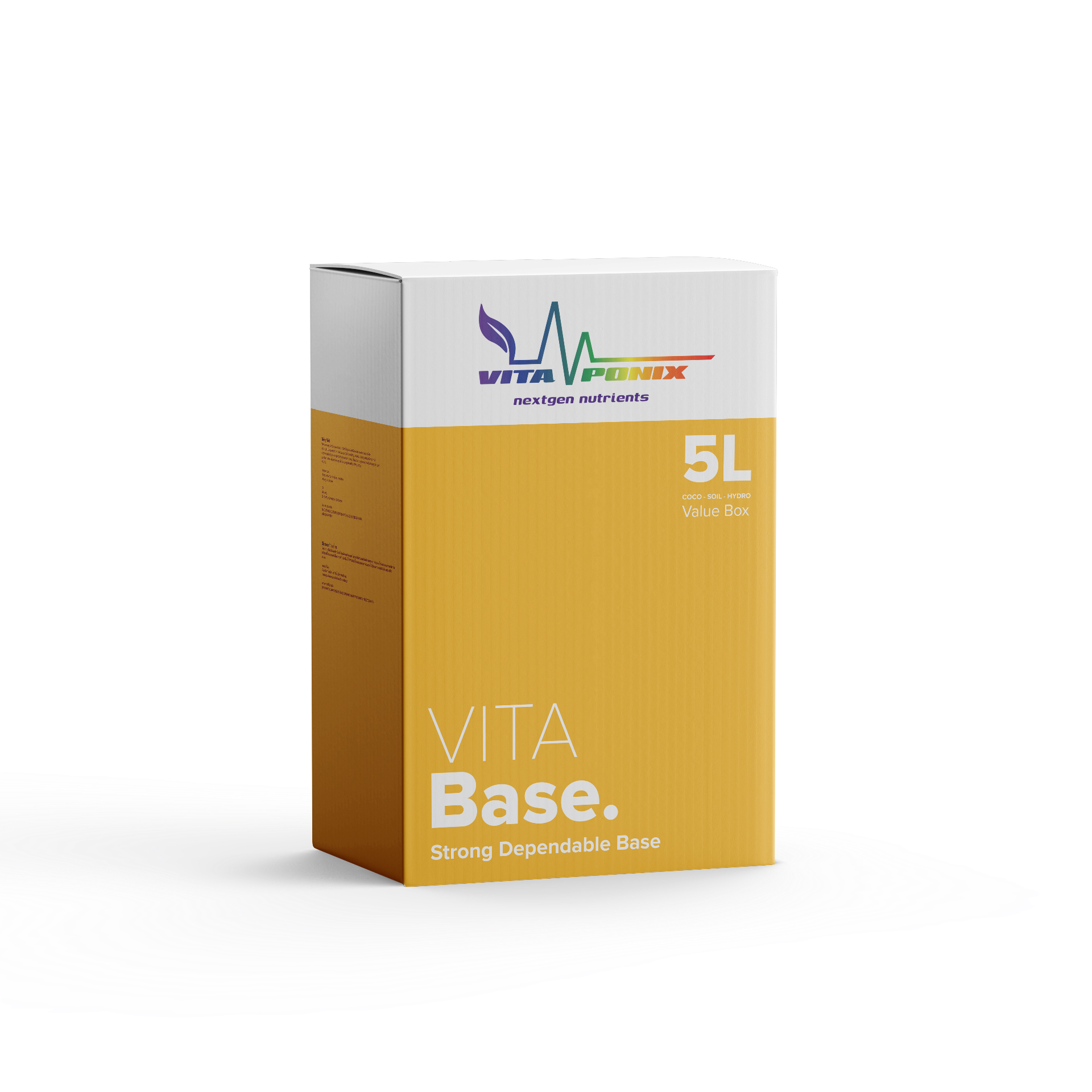
Grunnlag · Vekst + Blomstring
VitaBase™
Den grunnleggende bredspektrede næringsmatrisen.
VitaBase leverer det fulle elementære språket en plante trenger for å uttrykke sitt genetiske potensial. En farmasøytisk-grad, chelatert NPK-matrise uten fyllstoffer – grunnlaget for alle Vitaponix signalinndata bygger på.
- Meget løselig – umiddelbart biotilgjengelig
- Chelatert for raskere opptak
- Ingen fyllstoffer, ingen fyllkjemi
- Stabil NPK-profil gjennom vekst og inn i blomstring
- Volum
- 1L · 5L · 20L
- Format
- Konsentrat
- Stadium
- Vekst + Blomstring
- Patentert
- Ja
Pricing
Prices shown for Australia in AUD
Find it in a shop
Checking shop stock…
Buy Vitaponix locally
Contact Vitaponix International
Vitaponix products are available through approved local retailers and distributors, so you can buy close to home with local support.
We do not have a local supplier in Australia yet — contact Vitaponix International and we will help you get our products.
Contact Vitaponix InternationalFind a supplier near you →Opprinnelse
Hentet fra naturen
Marine sporelementer, vulkanske mineraler og atmosfærisk nitrogen raffinert til en presis basisprofil.
Signalering
Biologisk intelligens
Etablerer grunnleggende tilgjengelighet av elementære ioner, slik at hver nedstrøms signalvei starter med full biologisk oppløsning.
Bruksområde
Når skal det brukes
Brukes i alle stadier som grunnnæring.
Garantert analyse
Den elementære signaturen
N 20% · P₂O₅ 20% · Fe 0.05% · Mn 0.03% · B 0.01% · Cu 0.013% · Mo 0.005% · Zn 0.025%
Bruksanvisning
Hvordan brukes
Tilsett VitaBase gjennom hele vekstsyklusen sammen med Vitaponix næringsplan for jord, kokos eller hydro. Bruk 1–4 ml per liter. Tilsett alltid hver del separat og bland godt. Gå over til VitaBulk de siste ukene av blomstringen.
Frequently asked questions
Knowledge
What is photocatalysis and how it works
The mechanism behind light-driven catalysis, the photocatalysts involved, and why it matters for nutrient chemistry.
What is photocatalysis and how it works →
Kompatibel med