
Knowledge · Process
Photocatalytic oxidation.
Photocatalytic oxidation uses a light-activated catalyst to generate hydroxyl radicals that break organic contaminants apart — ideally all the way down to carbon dioxide and water.
PCO belongs to the family of advanced oxidation processes. What distinguishes it is that the oxidant is made on demand, at a surface, from nothing more exotic than light, water and oxygen. There is no chemical dosing and no residual to remove afterwards — the trade is that everything depends on getting photons and contaminants to the same square millimetre of catalyst at the same moment.
The reaction is deliberately non-selective. That is its strength against unknown mixed contamination, and its main constraint anywhere valuable organic chemistry is present.
PCO is one application of a broader mechanism, covered in the pillar guide: what is photocatalysis and how it works
Mechanism
How does photocatalytic oxidation work?
01
Activation
UV or visible photons above the catalyst's band gap create an electron–hole pair in the semiconductor — typically TiO₂ coated onto a plate, mesh or bead bed.
02
Radical generation
The hole oxidises adsorbed water or hydroxide to hydroxyl radicals (•OH); the electron reduces dissolved oxygen to superoxide (O₂•⁻). These are the reactive oxygen species that do the work.
03
Attack on the contaminant
Hydroxyl radicals are almost indiscriminate oxidants. They abstract hydrogen or add across double bonds, fragmenting organic molecules into smaller, more oxidised intermediates.
04
Mineralisation
Repeated attack drives the fragments all the way to CO₂, water and simple inorganic ions. Complete mineralisation — not just decolourisation — is the benchmark a PCO system is judged on.
The material choice sets which lamps and which wavelengths can drive step one — see what a photocatalyst is for the band gap and stability side of the design.
Applications
Where photocatalytic oxidation is used
Air purification
PCO cells in HVAC ducts and standalone purifiers oxidise volatile organic compounds — formaldehyde, toluene, odour molecules — that carbon filters only adsorb. Contact time is the limiting factor, so airflow and catalyst area must be matched.
Water and wastewater treatment
Used as an advanced oxidation process for pesticide residues, pharmaceutical traces, dyes and phenols that biological treatment leaves behind. Effective in low-turbidity water where light can actually reach the catalyst.
Disinfection
Reactive oxygen species damage cell walls and membranes, inactivating bacteria, biofilm precursors and many viruses without adding chemical residue to the water.
Self-cleaning and de-polluting surfaces
TiO₂-coated glass, concrete and tiles oxidise organic grime in place, and photocatalytic pavements convert NOₓ to nitrate that rain washes away.
Irrigation water for controlled-environment growing
As a pre-treatment step: oxidise organic load and pathogens in source water first, then mix the nutrient solution. Running it after dosing would attack the chelates and organics you just paid for.
Limits
What photocatalytic oxidation cannot do
Light delivery, not chemistry, is usually the bottleneck
Turbidity, coloured water and shadowed geometry cut the photon flux reaching the catalyst. Reactor design — thin channels, high illuminated area per volume — matters more than catalyst brand.
Intermediates can be worse than the parent compound
Partial oxidation of some VOCs produces aldehydes. Systems must be sized for mineralisation, and outlet air or water should be validated, not assumed.
Fouling and scavengers reduce real-world rates
Carbonate, bicarbonate and chloride scavenge hydroxyl radicals, while mineral scale and organic films blind the surface. Pre-filtration and periodic cleaning are part of the process, not an afterthought.
For growers the practical rule follows directly: treat water before the feed goes in, then build the solution on a stable, chelated base rather than relying on any single water treatment step to compensate for weak base chemistry.
FAQ
Photocatalytic oxidation questions
What is photocatalytic oxidation?
Photocatalytic oxidation, or PCO, is a process in which a light-activated catalyst generates reactive oxygen species — mainly hydroxyl radicals — that oxidise organic contaminants and micro-organisms, ideally all the way to carbon dioxide and water.
Is photocatalytic oxidation safe?
The radicals are extremely short-lived and stay within millimetres of the catalyst surface, so nothing reactive leaves a properly designed unit. The real safety questions are UV containment, any ozone the lamp itself produces, and whether the system fully oxidises intermediates rather than stopping halfway.
How is PCO different from UV disinfection?
UV alone damages DNA with photons and leaves chemical contaminants untouched. PCO uses those photons to make oxidants on a catalyst, so it both disinfects and destroys dissolved organics.
Does photocatalytic oxidation remove odours?
Yes — most odours are volatile organic molecules, which is precisely what hydroxyl radicals fragment. Removal depends on residence time over the catalyst, so a small cell in a fast duct will underperform.
Can PCO be used on a nutrient solution?
It should not be. Oxidation is non-selective, so it degrades chelating agents, humic and fulvic fractions and other organics in the feed. Treat the source water first, then dose nutrients into treated water.
Cluster
Back to the photocatalysis pillar
Knowledge
What is photocatalysis and how it works
The mechanism behind light-driven catalysis, the photocatalysts involved, and why it matters for nutrient chemistry.
Read more about What is photocatalysis and how it works →
Materials
What is a photocatalyst?
Band gap, surface area and stability: the properties that make TiO₂, ZnO and carbon nitride work as photocatalysts.
Read more about What is a photocatalyst? →
Product
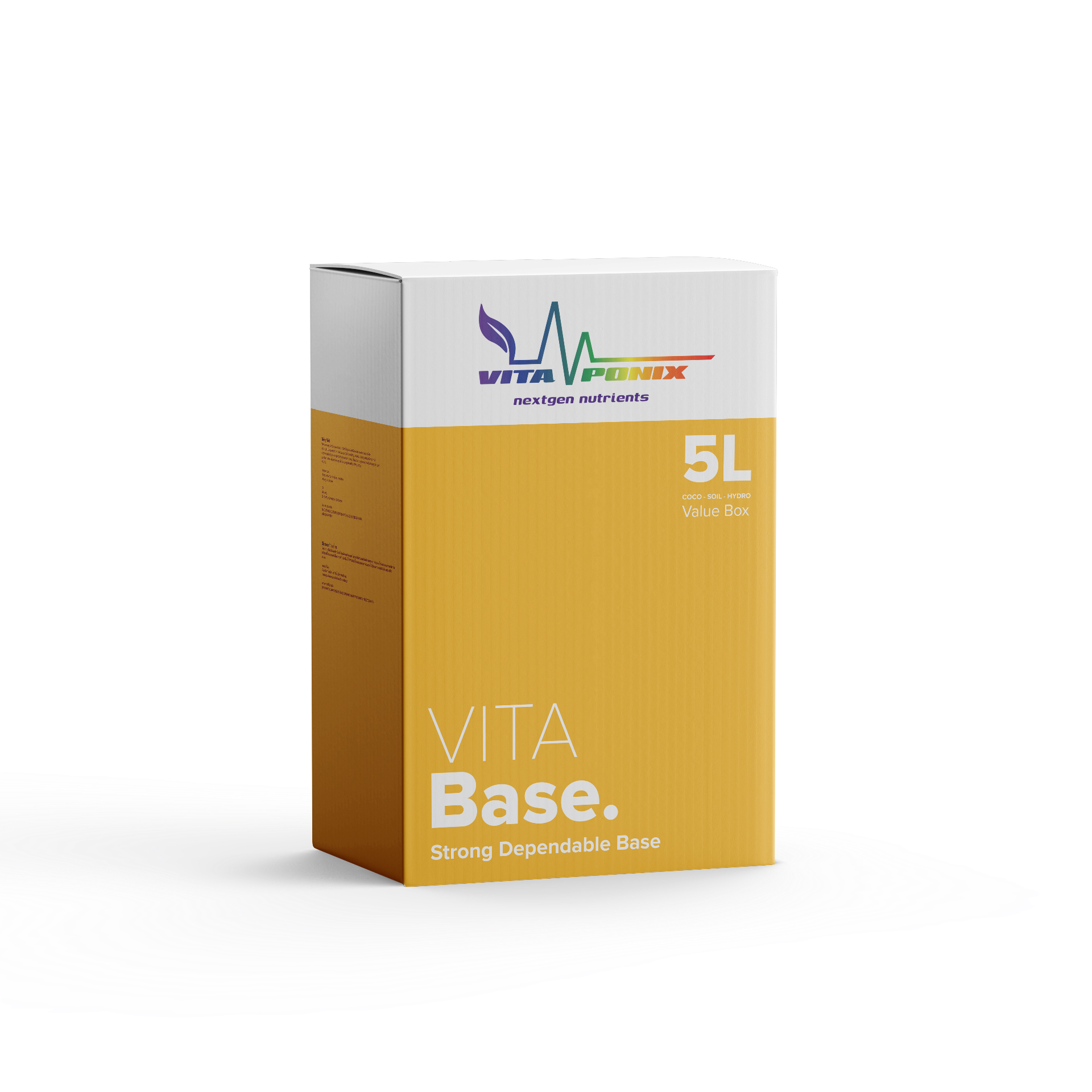
VitaBase — the foundational nutrient matrix
The chelated, filler-free base feed the photocatalytic and signaling inputs are built on top of.
Read more about VitaBase — the foundational nutrient matrix →